
Spring
Mar–May
Temperature12–24°C
Rain6–8 days/mo
Crowds
Cherry blossoms at Qinglong Temple, cycling the city wall, mild weather for outdoor exploration.
Independent guide · Updated August 2026
Home of the Terracotta Warriors, China's best-preserved ancient city wall, the starting point of the Silk Road, and one of the world's greatest street food cities.
Honest, practical advice from locals. Every price verified in person — most recently July 2026.

One day in xi'an
Keep scrolling — three frames of a day in the old capital.
Morning · 07:00
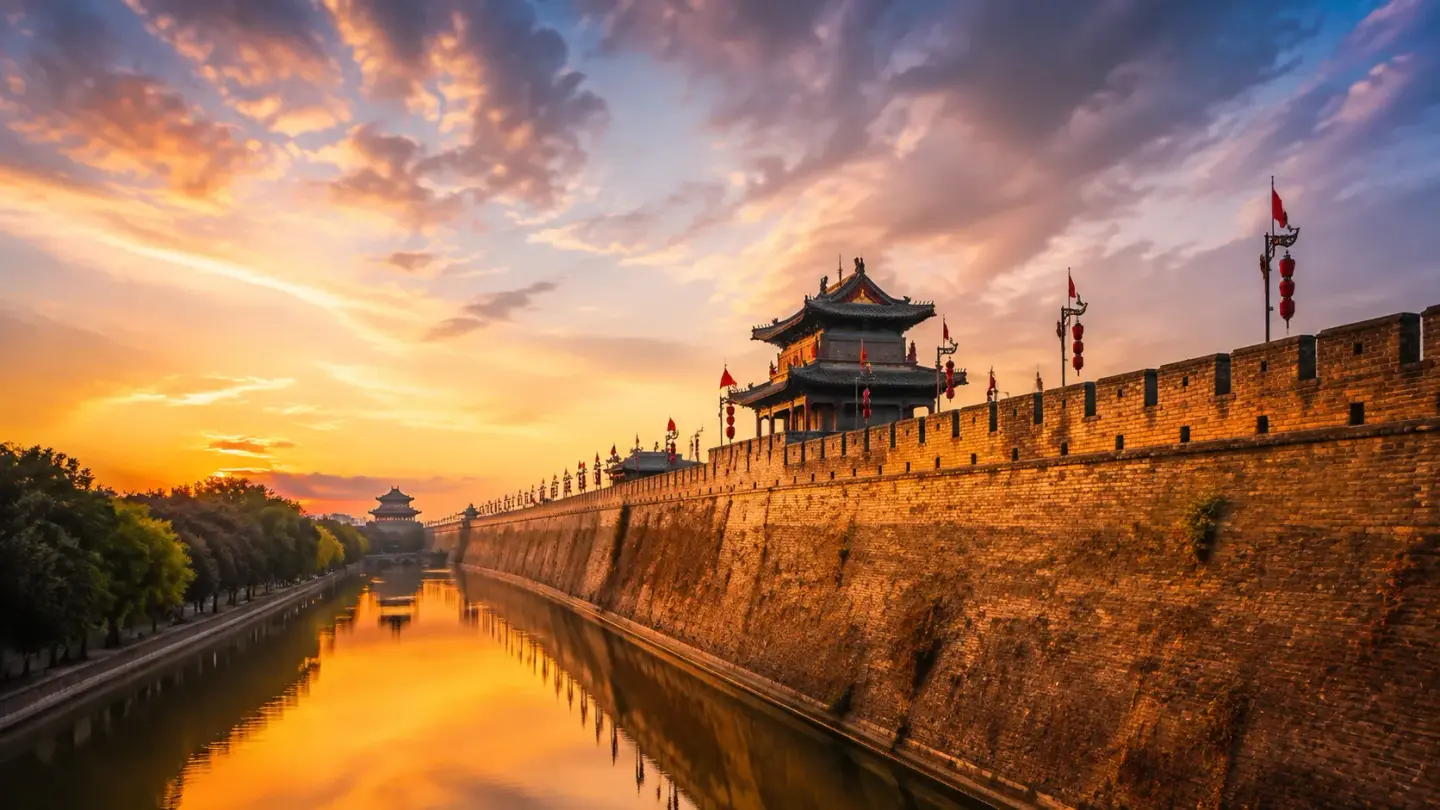
Sunrise over the 14 km Ming fortification. Rent a bike at the South Gate and watch the old city wake below you.
Afternoon · 14:00
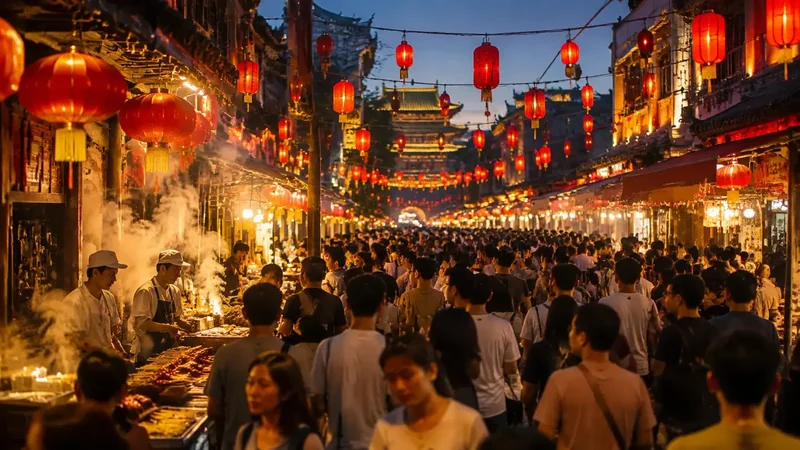
Biangbiang noodles, cumin-dusted lamb skewers, persimmon cakes. A 1,300-year-old Hui food street, loud and glorious.
Evening · 20:00
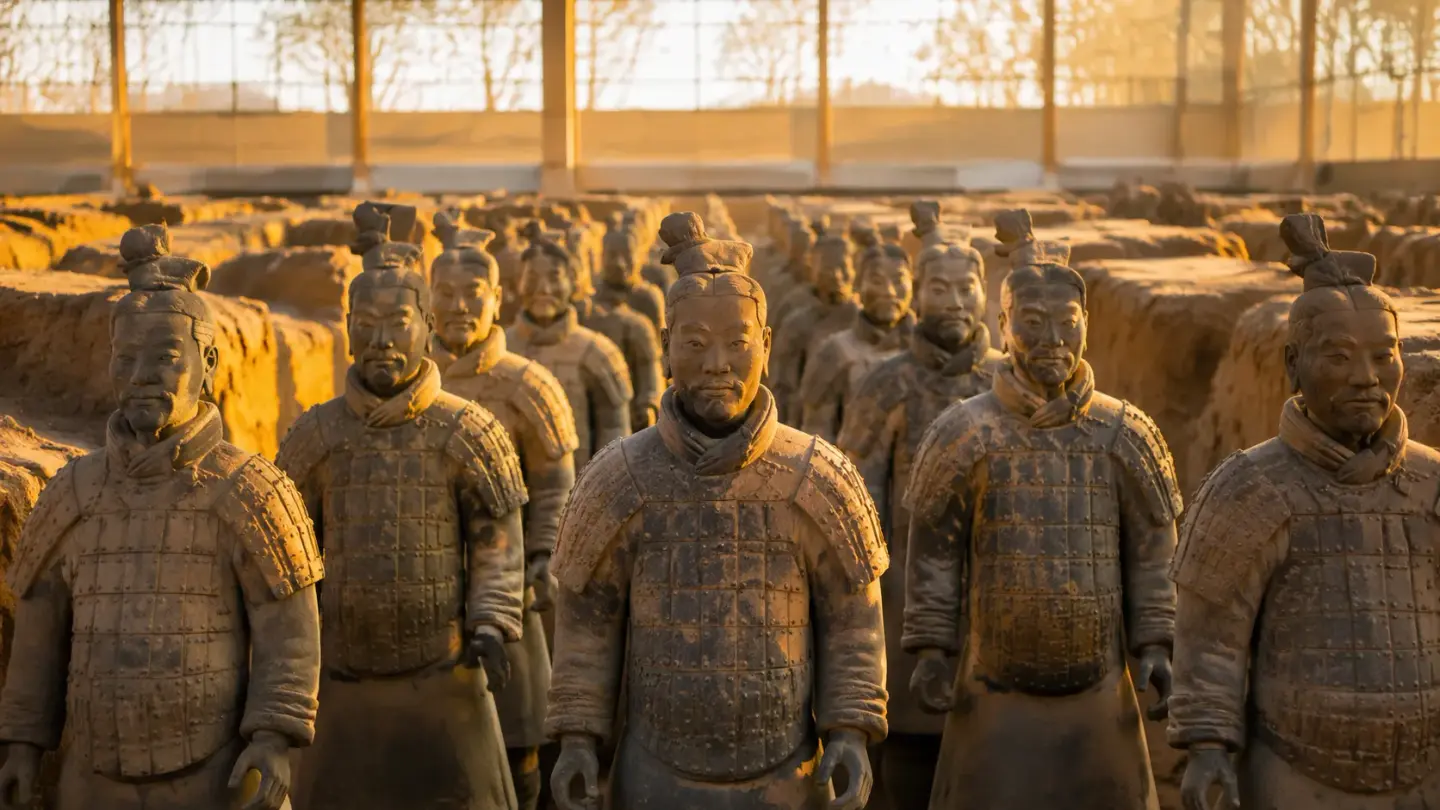
The old city glows amber as drumbeats roll across the square. End the day where it all began.
Chinese Name
西安 (Xi’ān)
“Western Peace”
Location
Shaanxi, China
Northwest China
History
3,100+ years
13 dynasties’ capital
Population
13 million
Largest in NW China
Silk Road
Starting Point
Since 2nd century BC
Nearest Airport
XIY
40 min to city center
Best Season
Mar–May, Sep–Nov
Mild, low rain
Recommended
3–5 days
For full experience
西安 · Xī’ān · “Western Peace”
Xi’an is one of the oldest cities in China and one of the Four Great Ancient Capitals, alongside Rome, Athens, and Cairo. With more than 3,100 years of history, it served as the capital of 13 Chinese dynasties including the Zhou, Qin, Han, and Tang — China’s golden ages. It is the eastern terminus of the Silk Road, the birthplace of Chinese civilization as we know it, and home to the Terracotta Warriors, a UNESCO World Heritage site and one of the greatest archaeological discoveries of the 20th century.
The city sits in the Guanzhong Plain in Shaanxi province, surrounded by the Qinling Mountains to the south and the Wei River to the north. This strategic location made it the natural capital for empires that ruled China for over a millennium. Today, Xi’an is a modern city of 13 million people, the largest in Northwest China, and a key hub in the Belt and Road Initiative.
Xi’an’s ancient city wall is the most complete city wall in China — a 14-kilometer rectangular fortification that you can walk or cycle on top of. Inside the wall lies the old city, a grid of streets unchanged since the Ming Dynasty, anchored by the Bell Tower and Drum Tower. Just south of the wall, the Big Wild Goose Pagoda has stood for 1,300 years, built to house Buddhist scriptures brought from India.
Then there is the food. Xi’an’s Muslim Quarter is one of the most famous street food districts in Asia — narrow stone alleys lined with vendors selling hand-pulled biangbiang noodles, cumin-dusted lamb skewers, persimmon cakes, and yangrou paomo (lamb soup with torn bread). The Hui Muslim community has lived here for over 1,300 years, and their cuisine is unlike anything else in China.
We have lived in and explored Xi’an since 2019. Every ticket price, metro route, and restaurant recommendation on this page is based on firsthand local experience — most recently verified in July 2026. No AI-generated content. No unverified claims.
At a Glance
The essentials in one place. If you only read one section, make it this one.
Prices verified at gates, July 2026. Student/senior discounts available.
Full ticket breakdown →Beilin District — Inside the city wall. Walk to the Bell Tower, Muslim Quarter, and South Gate.
Yanta District — Big Wild Goose Pagoda, Shaanxi Museum, Tang Paradise.
Lintong District — Terracotta Warriors + Huaqing Pool. 40 min east of downtown.
Answer three quick questions and we will recommend the perfect itinerary.
How many days do you have?
When are you visiting?
What interests you most?
When to Go
Every season has its charm. Match your travel style to the right time.
Spring
Mar–May
Cherry blossoms at Qinglong Temple, cycling the city wall, mild weather for outdoor exploration.
Summer
Jun–Aug
Escape the heat at Mount Huashan, night markets in the Muslim Quarter, evening light shows at Big Wild Goose Pagoda.
Autumn
Sep–Nov
Golden light at the Terracotta Warriors, Mid-Autumn mooncakes, crisp cycling weather on the city wall. Best season overall.
Winter
Dec–Feb
Hot springs at Huaqing Pool, Chinese New Year lanterns on the city wall, half-price attraction tickets, zero queues.
Click any marker to see details. Most attractions cluster inside or near the ancient City Wall.
Click a marker on the map to see attraction details
City Wall → Terracotta Warriors
40 min by bus 5
City Wall → Big Wild Goose Pagoda
15 min by metro
Terracotta Warriors → Huaqing Pool
10 min by taxi
Xi'an North Station → City Wall
25 min by metro
Travel Budget
Real numbers from our 2026 visits. All prices in US dollars (¥6.75 ≈ $1, Aug 2026).
Budget Traveler
$37-$60/day
Stay in hostels, eat street food, use public transit.
Mid-Range (Recommended)
$75-$120/day
Most visitors fall here. Comfortable, good food, all major sites.
Luxury
$180 +/day
Private guides, luxury hotels, no compromises.
All prices verified July 2026. See our ticket guide and hotel guide for detailed breakdowns.
Average daily travel cost per person in US dollars, including attractions, meals, and a mid-range hotel. Prices verified in 2026.
Cheapest Month
January
$52/day
Best Value
November
$59/day
Most Expensive
October
$96/day
Prices assume mid-range accommodation ($22-37/night), attraction tickets, 3 meals/day, and metro/bus transport. Flights not included.
Must-See Spots
From the world-famous Terracotta Warriors to hidden local gems, these are the places that make Xi’an unforgettable.
The 8th Wonder of the World
China's best-preserved fortification
Xi'an's street food paradise
1,300-year-old Buddhist landmark
China's best provincial museum
China’s most dramatic hike
Tang Dynasty imperial baths
The heart of the old city
The quieter mausoleum
Itineraries at a Glance
Three proven itineraries. Click through for hour-by-hour details.
1-Day Express
Morning: Terracotta Warriors. Afternoon: City Wall cycling at sunset. Evening: Muslim Quarter food crawl. The essential Xi'an in 12 hours.
See full itinerary →
3-Day Classic
Day 1: Warriors + Huaqing Pool. Day 2: City Wall + Muslim Quarter + Bell Tower. Day 3: Shaanxi Museum + Big Wild Goose Pagoda. The sweet spot.
See full itinerary →
5-Day Explorer
Add Mount Huashan day hike, Han Yangling glass-floor tombs, Tang Paradise night show, and a day trip beyond the city.
See full itinerary →
Experience Xi'an
Xi'an transforms with the seasons. Here's what each one actually feels like.
Spring · April · Xi’an
7:00 AM. You pedal onto the South Gate ramp as the morning mist lifts off the city wall. Temperature: 16°C, no humidity, cherry blossoms lining the moat below. The 14km loop around the old city is nearly empty at this hour. You stop at the West Gate to watch tai chi practitioners moving in slow unison under ancient pagoda trees. Lunch is liangpi (cold skin noodles) from a street stall near the Bell Tower. Afternoon: the Shaanxi History Museum, cool and quiet, Tang Dynasty gold gleaming under museum lights. Evening: rooftop hot pot in the old city, the wall glowing amber above you.
Summer · July · Muslim Quarter
8:00 PM. The sun finally sets and the Muslim Quarter comes alive. The heat of the day fades as lanterns flicker on above narrow stone streets. You follow the smell of cumin through the crowd: lamb skewers sizzling over charcoal, each one hand-turned by a Hui vendor who has worked this same corner for 30 years. A bowl of yangrou paomo, the bread torn by hand into tiny pieces before being drowned in rich lamb broth. Further down the alley: persimmon cakes, sticky and sweet, fried right in front of you. You wash it all down with cold suanmeitang (sour plum drink) and realize you have been eating for two hours straight.
Autumn · October · Terracotta Warriors
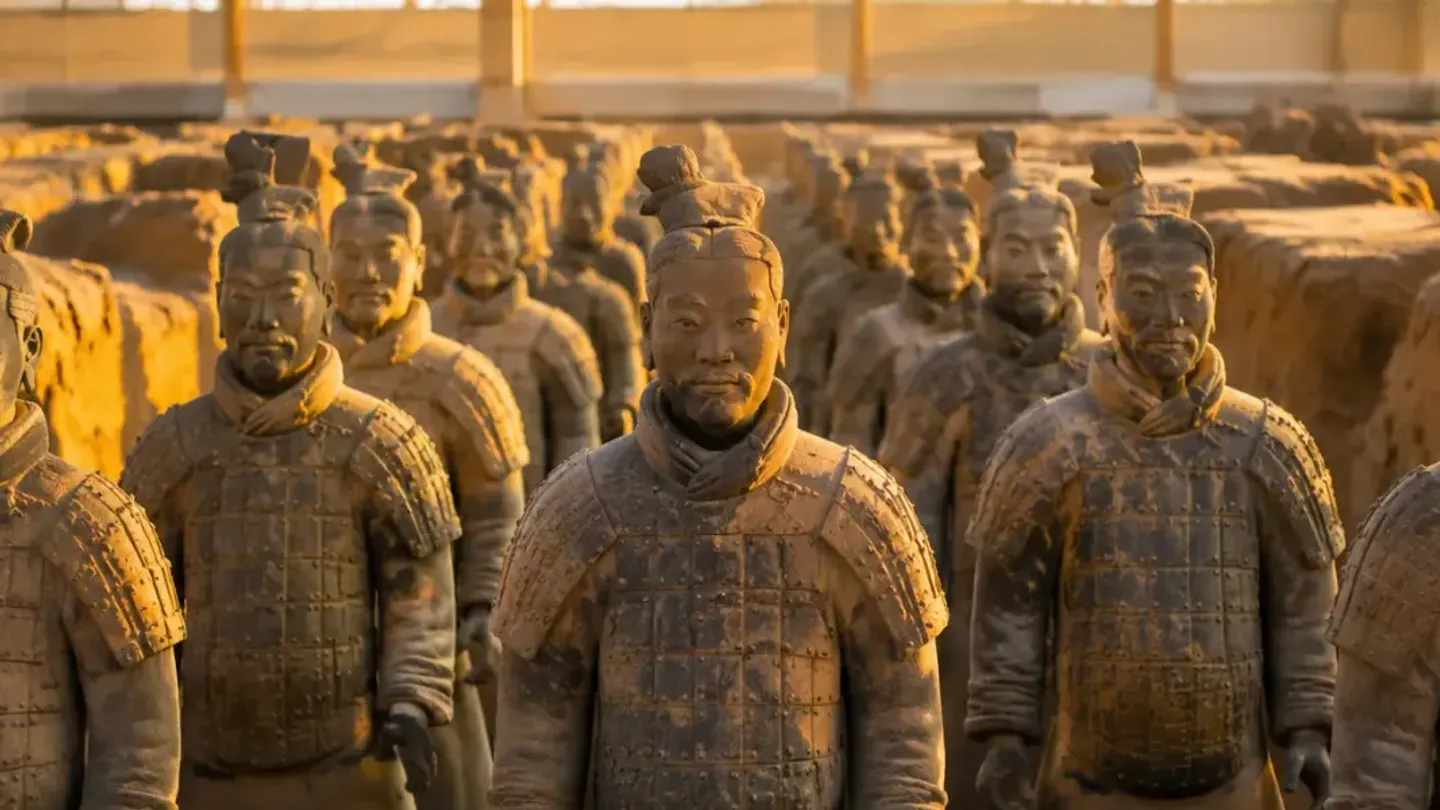
8:30 AM. You are through the gates at Pit 1 as the first visitor. The low golden light of an October morning streams through the hangar windows, catching the edges of 2,000 terracotta soldiers standing in formation. No jostling, no selfie sticks. Just you and two millennia of silence. Each face is different, and you find yourself studying them one by one. After two hours, the tour groups arrive and the spell breaks. But you have already had your moment. Lunch at a farmhouse restaurant nearby: hand-pulled biangbiang noodles wider than your thumb. Afternoon: Huaqing Hot Springs, the imperial bath where Tang emperors wintered. The pomegranate trees are heavy with fruit.
Winter · January · Huaqing Pool
It is -2°C and snow is falling on Mount Li. You are sitting neck-deep in a hot spring pool at Huaqing Palace, steam rising around you into the freezing air. This is the same hot spring where Yang Guifei, the most beautiful woman in Chinese history, bathed during the Tang Dynasty. The contrast of freezing air and 40°C water is indescribable. Afterward: hot pot in downtown Xi’an, the windows fogged from boiling broth, lamb slices dipped in sesame paste. Outside, the city wall is lit with red lanterns for Chinese New Year. You have never been this warm while this cold.
FAQ
Straight answers from locals who live here.
$18 (peak season Mar-Nov) or $15 (off-peak Dec-Feb). Students and seniors 60+ get 50% off. Tickets can be purchased at the gate or via the official WeChat mini-program. See our full ticket guide.
April, May, September, and October are ideal. Spring offers cherry blossoms and mild temperatures (12-24°C). Autumn brings golden light and crisp air (10-22°C). Avoid Chinese New Year (late Jan/Feb) and Golden Week (Oct 1-7) when attractions sell out and hotels triple in price. See our season-by-season guide.
Fly into Xi’an Xianyang International Airport (XIY) — direct flights from Beijing, Shanghai, Guangzhou, Seoul, and Bangkok. High-speed train from Beijing (4.5h, $75), Shanghai (6h, $100), or Chengdu (3.5h, $39). From the airport, Metro Line 14 connects to the city center in 40 minutes ($1). See our transportation guide.
3 full days is the sweet spot: Day 1 Terracotta Warriors + Huaqing Pool, Day 2 City Wall + Muslim Quarter + Bell Tower, Day 3 Shaanxi Museum + Big Wild Goose Pagoda + Tang Paradise. 5 days adds Mount Huashan and Han Yangling. 1 day works for a whistle-stop — hit the Terracotta Warriors in the morning and the City Wall at sunset. See our itinerary plans.
Yes, but it is a long day. The high-speed train from Beijing to Xi’an takes 4.5 hours. Leave Beijing at 6:30 AM, arrive at Xi’an North Station by 11 AM, then take a taxi to the Terracotta Warriors (40 min, $18). You will have 3-4 hours at the site before catching the last train back around 6 PM. It is rushed but doable. For a better experience, stay at least one night.
Yes. Xi’an is very safe. Violent crime is extremely rare. The main practical risks are pickpocketing in crowded areas (especially the Muslim Quarter at night) and taxi drivers overcharging at the airport. Use the metro or ride-hailing apps (Didi) instead. Solo female travelers report feeling safe walking in the city center even after dark.
Inside the City Wall (Beilin District) is best for first-timers — walk to the Bell Tower, Muslim Quarter, and South Gate. Hotels from $22-$120/night. Yanta District near the Big Wild Goose Pagoda is quieter with newer hotels. Lintong District (near the Terracotta Warriors) is convenient if that is your main focus but far from everything else. See our accommodation guide.
Most foreign visitors need a Chinese tourist visa (L visa) before arrival. Apply at your nearest Chinese embassy or visa center. Processing takes 4-7 business days. The 240-hour (10-day) transit visa is available through Xi’an for citizens of 54 countries including the US, UK, EU, and Australia. Your passport must be valid for at least 6 months beyond your planned departure.
Limited. Major hotels and the Terracotta Warriors museum have some English signage and audio guides. The metro has English announcements. In restaurants, the Muslim Quarter, and on buses, English is rare. Download Google Translate’s offline Chinese pack and save key phrases. Pointing at menu photos works well.
Biangbiang noodles (thick, hand-pulled noodles), yangrou paomo (lamb soup with torn bread), roujiamo (Chinese hamburger), lamb skewers from the Muslim Quarter, liangpi (cold skin noodles), and persimmon cakes. The Muslim Quarter is the epicenter of Xi’an street food — go after 7 PM when it really comes alive. See our complete food guide.
Crowd Intelligence
Know exactly when Xi'an is packed and when you can have it almost to yourself.
Chinese New Year Late Jan – Early Feb
Largest human migration. Train tickets sell out. Book 3+ months ahead.
Qing Ming Festival Early April
Long weekend. Popular sites get busy but manageable.
Labor Day May 1–5
Domestic travel peak. Hotels 2-3x normal price.
Dragon Boat Festival Late May / June
Hot but fewer crowds than Labor Day.
Summer Holidays Jul – Aug
Students on break. Terracotta Warriors at capacity.
Mid-Autumn Festival September
Mooncakes everywhere. Manageable crowds, great weather.
Golden Week Oct 1–7
AVOID. Every site, train, and hotel is maxed out.
Early November Nov 1–15
The sweet spot. No holidays, perfect weather, zero queues.
Trust & Experience
Every recommendation on this page is backed by years of firsthand local experience.
Moved to Xi’an for work. Spent weekends exploring every corner of the city wall, cycling all 14km. Discovered the Muslim Quarter is best after 9 PM.
Visited the Terracotta Warriors 6 times across all seasons. Learned the best photo angles, quietest hours, and which guide to ask for at the gate.
Ate at every stall in the Muslim Quarter over three months. Ranked every biangbiang noodle shop. Found the secret breakfast spots locals don’t share online.
Deliberately visited during October 1-7 to document crowd patterns. Four-hour queues at the Terracotta Warriors, 3x hotel prices, and the strategies that actually work.
Re-verified every ticket price, opening hour, and restaurant recommendation on the ground. Added Mount Huashan and Han Yangling to our coverage.
Most recent trip: checked ticket machines at every major attraction, confirmed Shaanxi Museum’s new online booking system, updated metro line information. This page reflects what we found less than a month ago.
Written by Li Wei
History & Culture Writer · Xi'an since 2019
Li Wei has lived in Xi'an since 2019 and has visited every major museum and historical site in Shaanxi province at least three times. He spends his weekends exploring forgotten Tang dynasty ruins and reading Ming-era city maps. Before writing travel guides, he worked as a research assistant at the Shaanxi History Museum.
Keep Planning
Dive deeper into every aspect of planning your Xi’an trip.
Itinerary Plans
1-day, 3-day, and 5-day schedules with budgets.
Food Guide
20 must-try dishes and where to find them.
Weather Guide
Month-by-month weather, what to pack, when to go.
Day Trips
Mount Huashan, Han Yangling, and beyond.
Nightlife
Bars, night markets, and evening shows.
Shopping
What to buy, where, and how to bargain.
Payment Guide
WeChat Pay & Alipay setup for foreigners.
Phrasebook
40+ essential Chinese phrases, tap to copy.
SIM Card Guide
Get connected: SIM, eSIM, and registration.
Transit Visa
240-hour visa-free transit explained.
Transportation
How to get to Xi'an and get around.
Blog
Deep dives, hidden gems, and local stories.
Start with our itinerary planner, or jump straight to what you need.