Food Guide
What to Eat in Xi'an
Xi'an's food scene is one of the best in China — shaped by 1,300 years of Hui Muslim influence, Silk Road trade, and the city's position as the ancient capital. Here is everything worth eating and exactly where to find it.
Written by Wang Fang
Food & Culture Writer · Xi'an since 2020
Wang Fang grew up in Xi'an's Beilin District, inside the city walls. She has eaten at over 300 restaurants and street stalls across the city since 2020, keeping detailed notes on which shops are still good, which have declined, and which new spots deserve a visit. Her food recommendations come from paid visits, never from sponsored meals.
Street Food
$0.5-$4
Per dish
Mid-Range
$6-$15
Per person
Fine Dining
$22 +
Per person
12 Must-Try Dishes
Ordered from iconic to adventurous.
Yangrou Paomo (羊肉泡馁)
$4-$7Lamb soup with torn bread
Xi'an's signature dish. You tear a flatbread into tiny pieces by hand (the smaller the better), then the chef drowns it in rich lamb broth with vermicelli and tender lamb. Warming, filling, and unlike anything else in China. Each bowl takes 20 minutes to prepare properly.
Where: Muslim Quarter, Tongshengxiang
Biangbiang Noodles
$2-$4Thick belt-wide hand-pulled noodles
Noodles as wide as a belt, hand-pulled and slapped against the counter with a loud 'biang' sound. Topped with chili flakes, minced garlic, and sizzling hot oil poured over at the table. The character 'biang' is one of the most complex in Chinese with 58 strokes.
Where: Sajinqiao Street, local noodle shops
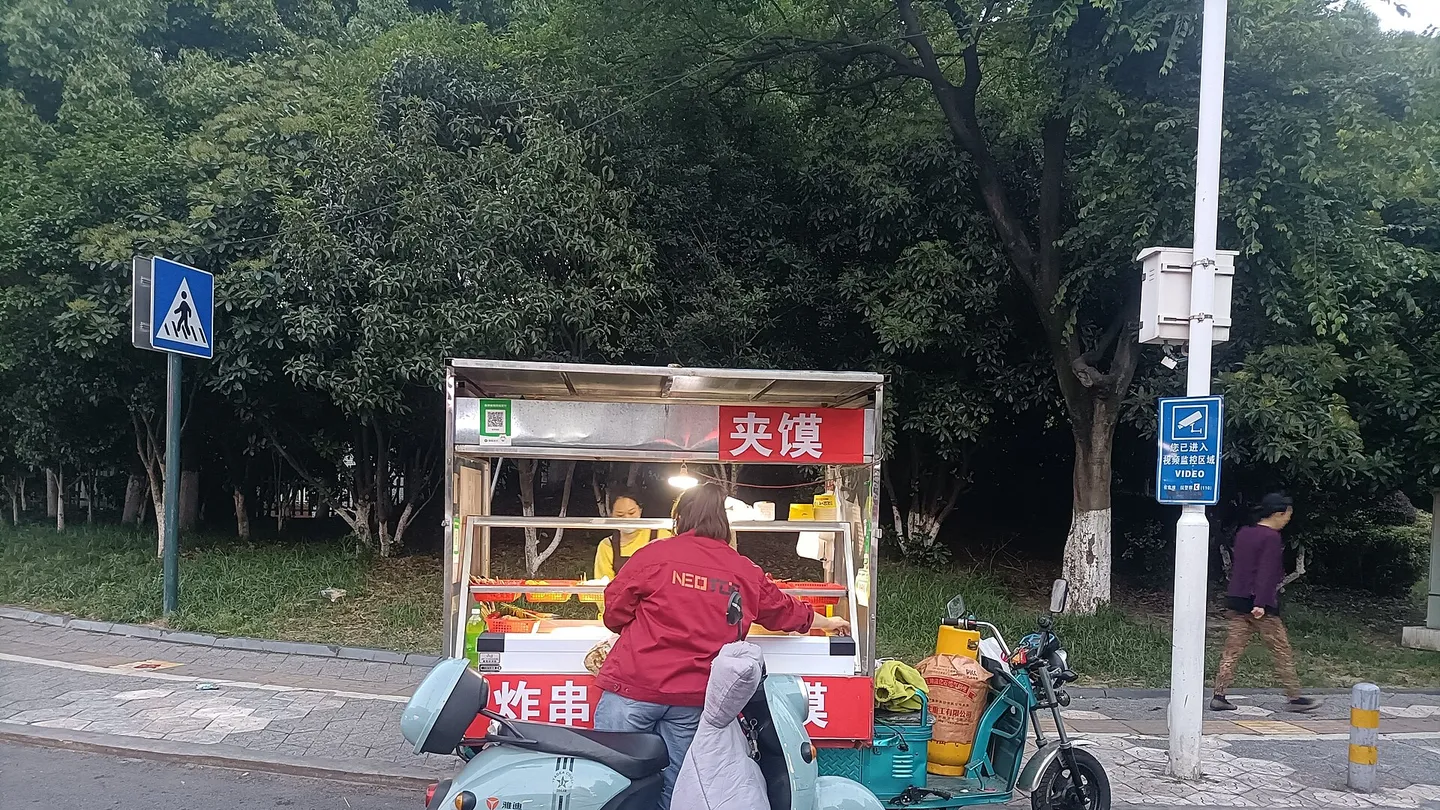
Roujiamo (肉夹馁)
$1.5-$3Chinese hamburger
Braised and shredded beef (or pork outside the Muslim Quarter) stuffed into a crispy baked flatbread. The bread is baked in clay ovens right on the street. Xi'an's version uses beef in the Muslim Quarter, making it halal. The perfect street snack at any time of day.
Where: Everywhere, Muslim Quarter stalls
Lamb Skewers (羊肉串)
$0.4-$0.5/stickCumin-dusted charcoal-grilled skewers
Thin strips of lamb threaded on metal skewers, grilled over charcoal, and dusted with cumin, chili flakes, and salt. Sold by the stick. The best vendors have been working the same street corner for decades. Eat them hot, standing up, with a cold suanmeitang.
Where: Muslim Quarter, Dongxin Street Night Market
Liangpi (凉皮)
$1-$2Cold skin noodles
Chilled, slippery wheat or rice noodles in a tangy, spicy dressing with shredded cucumber, bean sprouts, and gluten cubes. Refreshing and addictive. The perfect hot-weather lunch. Summer-only in many shops.
Where: Street stalls throughout the city
Persimmon Cakes (柿子饼)
$0.4-$0.5 eachSweet fried persimmon cakes
Made from locally grown Lintong persimmons, mashed and mixed with glutinous rice flour, filled with sweet bean or date paste, and fried on large griddles until golden. Sticky, sweet, and best eaten hot. A Muslim Quarter specialty.
Where: Muslim Quarter
Suanmeitang (酸梅汤)
$0.5-$1.5Sour plum drink
Xi'an's unofficial beverage. A dark, sweet-sour drink made from smoked plums, hawthorn, and rock sugar. Served ice-cold from large metal urns. The perfect palate cleanser between spicy dishes.
Where: Everywhere
Hulu Tou (葫芦头)
$2-$4Fried dough ball soup
A Xi'an specialty: a large fried dough ball (the 'gourd head') served in a rich pork bone broth with wood ear mushrooms, tofu, and vegetables. Surprisingly light despite the name. A breakfast staple among locals.
Where: Local neighborhood restaurants
Casserole Noodles (砂锅面)
$3-$5Clay pot noodles
Noodles cooked and served in an individual clay pot, bubbling hot with vegetables, meat, and a rich broth. The clay pot keeps it hot for the entire meal. Popular in winter.
Where: Local restaurants citywide
Qishan Noodles (岐山哨子面)
$2-$4Hot and sour noodles from Qishan
From the nearby town of Qishan, these thin noodles come in a hot-and-sour broth with diced pork, wood ear mushrooms, egg, and tofu. The defining flavors are vinegar and chili. Five flavors in every spoonful.
Where: Shaanxi restaurants
Jinggao (甄糕)
$0.5-$1.5Steamed glutinous rice cake
Layers of glutinous rice and red bean paste steamed together, then sliced and served with a drizzle of osmanthus honey. A traditional Muslim Quarter sweet, sold from mobile carts in the morning.
Where: Muslim Quarter street carts
Guantang Baozi (灌汤包子)
$2-$4/dozenSoup-filled steamed buns
Steamed buns filled with seasoned lamb and piping hot soup broth inside. Bite carefully — the soup will spray. Dip in black vinegar with shredded ginger. The Jia Brothers restaurant in the Muslim Quarter is the most famous.
Where: Muslim Quarter, Jia Brothers
The Food Streets: Where to Go
Beiyuanmen (北院门)
The famous cobblestone artery behind the Drum Tower. Lined with souvenir shops, big-name restaurants, and street food stalls. Busy and touristy, but you have to walk it at least once. Best for: first-time browsing, photo ops, and big restaurant meals. Go after 7 PM.
Try: Yangrou paomo, persimmon cakes, lamb skewers
Sajinqiao (洒金桥)
Where Xi'an locals actually eat. Narrower, less polished, significantly better food. Fewer tourists, more character. Walk past the Drum Tower and keep going north — when the souvenir shops disappear, you've arrived. Best for: serious food exploration.
Try: Biangbiang noodles, roujiamo, liangpi
Dongxin Street (东新街)
Less known to tourists. A mix of street food stalls and small restaurants that stays lively until 2 AM. Best for: late-night eating after 10 PM when the main quarter winds down.
Try: Lamb skewers, hot pot, barbecue
Dapiyuan (大皮院)
A quieter alley running parallel to Beiyuanmen. Pleasant during the day with excellent family-run noodle shops and tea houses. Best for: relaxed lunch away from the crowds.
Try: Hand-pulled noodles, dumplings, tea
Practical Tips
How Much to Budget for Food
| Meal Type | Budget | Mid-Range | Splurge |
|---|---|---|---|
| Breakfast | $0.5-$2 | $3-$6 | $7-$12 |
| Lunch | $2-$4 | $6-$12 | $15-$30 |
| Dinner | $3-$6 | $9-$18 | $22-$60 |
| Street snacks | $0.5-$2 | $3-$6 | -- |
Realistic daily food budget: $9-$15 (budget, street food heavy), $22-$37 (mid-range), $45-$75 (restaurant every meal).